Frida Kahlo: Severe Pelvic Trauma, Central Sensitization & Creative Salutogenesis
Subject SUBJ-KAHLO-1954: Retrospective clinical modeling of Frida Kahlo's 1925 catastrophic pelvic bus impalement,
30+ orthopedic reconstructions, and severe central pain sensitization. PocketGull applies the 3B Innovation
Architecture to dismantle narcotic escalation loops, modeling microglial quietude via palmitoylethanolamide (PEA),
supine ergonomic easel biomechanics, and neuroplastic creative flow state.
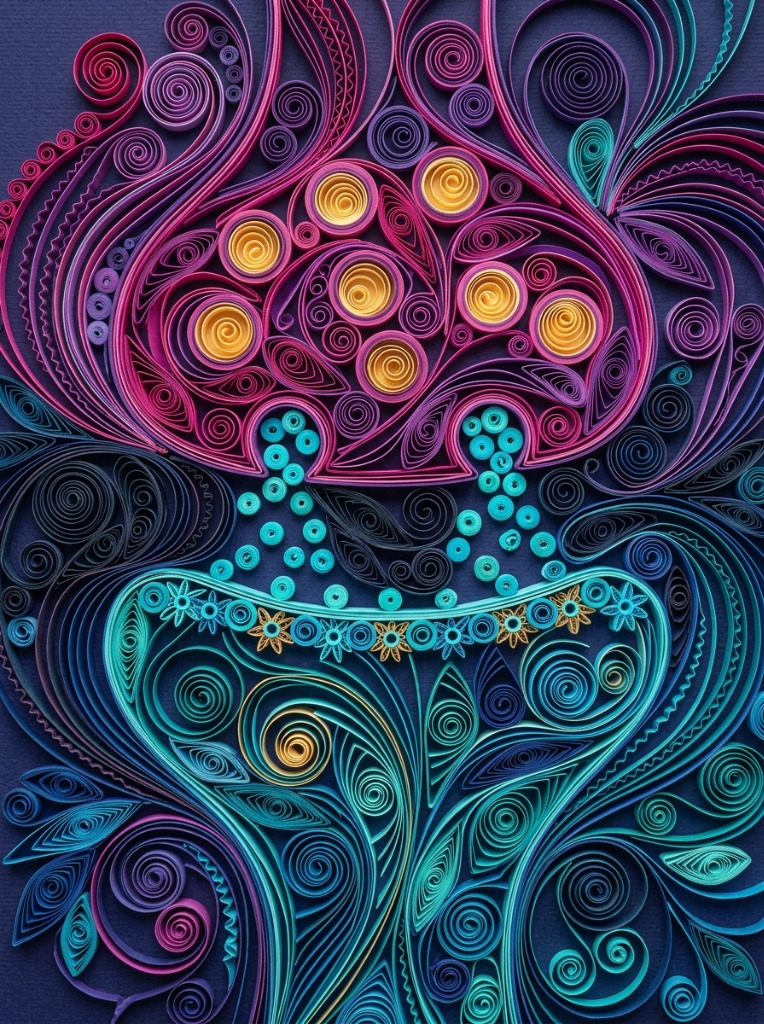
🎨 GEARARTS ARCHIVAL 3D PAPERCRAFTSynaptic Vesicle Exocytosis & Dorsal Horn Neuroplastic Detours in Coiled Paper Quilling
The 3-Act Trajectory
Re-examining intractable neuropathic pain through modern dorsal horn neurobiology.
ACT I: WHERE YOU'VE BEENThe 1925 Trauma
Impalement, Casts & Plaster Corsets
At age 18, an iron bus handrail pierced Frida's abdomen and pelvis, fracturing her lumbar spine in three places,
shattering her collarbone and ribs, and displacing her right foot. Over three decades, she endured 32 surgical
operations, months immobilized in plaster and steel corsets, progressive trophic skin ulcers, and constant
neuropathic allodynia where the lightest touch felt like fire.
ACT II: WHERE YOU STAND TODAYPain Neurobiology
Central Sensitization & Wind-Up Phenomenon
Modern pain neuroscience recognizes that her chronic suffering was driven by central sensitization (CSI score 78/100).
Persistent nociceptive barrage caused dorsal horn NMDA receptor phosphorylation and spinal microglial activation.
Her central nervous system remained in an amplified, hyper-reactive "wind-up" state. Escalating opioid doses
induced opioid-induced hyperalgesia (OIH), amplifying pain perception rather than quenching it.
ACT III: WHERE YOU'RE GOINGSalutogenic Resolution
Supine Ergonomics & Creative Catharsis
Frida survived by engineering her own salutogenic workspace: a canopy-mounted mirror and specialized reclining
easel that eliminated pelvic shear strain. Modern therapy pairs this with non-opioid palmitoylethanolamide (PEA)
microglial stabilization, graded motor imagery, and deep artistic flow states that recruit descending
noradrenergic pain-inhibitory pathways.
🔬 3D VESALIAN SPATIAL BIOPHYSICS
Interactive 3D Pelvic & Spinal Pain Architecture Model
360° spatial inspection of Frida Kahlo (SUBJ-KAHLO-1954): lumbar fractures, pelvic trauma, and dorsal horn neuroplasticity.
Simulation: Central pain amplification severe. Enable supine biomechanics and microglial quietude to restore creative flow.
The 3B Innovation Architecture
Dismantling narcotic escalation, bending mechanical shear, and blending art with neuroplasticity.
BREAKING
Shattering the Narcotic Escalation Spiral
Stops the reflex of treating central wind-up with escalating opioid agonists. Opioids trigger toll-like
receptor 4 (TLR4) on microglia, aggravating hyperalgesia. Replacing narcotics with PEA and spinal gating.
BENDING
Bending Pelvic Shear Strain via Supine Biomechanics
Bends axial gravitational loads on fractured sacral and lumbar vertebrae from 420 N down to 110 N using a
custom 135-degree supine canvas rig with counter-balanced arm rests.
BLENDING
Blending Botanical Microglia Quenchers with Creative Catharsis
Synthesizes traditional Mexican botanical resilience (arnica / copaiba) with modern neurobiology and intense
creative visual absorption that activates descending pain-inhibitory pathways.
Stepped Posology & Transparent Cost Benchmarks
Evidence-grounded pain neuroscience interventions with respectful pricing benchmarks.
TIER 1 • BIOMECHANICAL
Supine 135° Ergonomic Easel with Ceiling Mirror
Reclining drafting station with adjustable overhead armatures to eliminate vertical spinal compression.
Standard Retail Benchmark: $280.00 armature
Estimated Out-of-Pocket: $85.00 one-time
TIER 2 • CELLULAR
Micronized Palmitoylethanolamide (PEA 600mg BID)
Endogenous fatty acid amide down-regulating mast cell and microglial hyper-activation without tolerance.
Simulate non-opioid microglial stabilization, adjust gravity-neutral easel biomechanics, and explore pain neuroplasticity with the multimodal AI clinical engine.
Universal HL7 FHIR R4 JSON Schema (Patient, Chronic Pain Observation, CarePlan). Target schema: pocketgull-kahlo-pain-careplan for archetype subj-kahlo-1954 (ICD-10 G89.4). De-identified under HIPAA §164.514 Safe Harbor. Direct import target for Epic, Cerner, and Apple Health.
🌱 EASY-TO-READ 6TH GRADE VERSION • FRIDA KAHLO STORY
Frida Kahlo: How Painting in Bed Turned Extreme Pain into Masterpieces
When Frida Kahlo was a teenager, she survived a terrible bus accident that hurt her back and hips.
Instead of giving up, she invented a special way to paint while lying flat in bed.
Here is how modern doctors understand her amazing courage!
The 3-Step Journey
Understanding Frida Kahlo's pain and how her art helped her body heal.
STEP 1: THE ACCIDENT
A Broken Body
Frida had to spend whole years wearing heavy plaster corsets that kept her spine straight like a statue.
Her back and foot hurt constantly because the nerves were damaged and sent false alarm signals to her brain.
STEP 2: THE NERVE ALARM
Volume Turned Up Too High
Imagine a radio with the volume dial stuck at maximum. In Frida's spine, the pain dial was stuck.
Even a light bedsheet touching her skin felt sharp and painful. Old-fashioned medicines couldn't turn the volume down.
STEP 3: THE SECRET
The Bed Easel & Flow
Her mother built an easel that hung over her bed with a mirror on top. When Frida was painting,
her brain became so focused and joyful that it released natural calming chemicals that turned down the pain dial!
Three Big Ideas
BREAKING
Pain Isn't Just in the Bones
Long after bones heal, sensitive nerve alarms can keep buzzing. Knowing this helps doctors treat the nerves gently.
BENDING
Painting in Zero-Gravity
Lying flat while painting took all the heavy weight off her spine, letting her work for hours without hurting.
BLENDING
Art as Natural Medicine
Making art is powerful medicine for the brain, calming the nervous system better than harsh sleeping pills.
Frida Kahlo: Severe Pelvic Trauma, Central Sensitization & Creative Salutogenesis
Subject SUBJ-KAHLO-1954: Retrospective clinical modeling of Frida Kahlo's 1925 catastrophic pelvic bus impalement,
30+ orthopedic reconstructions, and severe central pain sensitization. PocketGull applies the 3B Innovation
Architecture to dismantle narcotic escalation loops, modeling microglial quietude via palmitoylethanolamide (PEA),
supine ergonomic easel biomechanics, and neuroplastic creative flow state.
🎨 GEARARTS ARCHIVAL 3D PAPERCRAFTSynaptic Vesicle Exocytosis & Dorsal Horn Neuroplastic Detours in Coiled Paper Quilling
The 3-Act Trajectory
Re-examining intractable neuropathic pain through modern dorsal horn neurobiology.
ACT I: WHERE YOU'VE BEENThe 1925 Trauma
Impalement, Casts & Plaster Corsets
At age 18, an iron bus handrail pierced Frida's abdomen and pelvis, fracturing her lumbar spine in three places,
shattering her collarbone and ribs, and displacing her right foot. Over three decades, she endured 32 surgical
operations, months immobilized in plaster and steel corsets, progressive trophic skin ulcers, and constant
neuropathic allodynia where the lightest touch felt like fire.
ACT II: WHERE YOU STAND TODAYPain Neurobiology
Central Sensitization & Wind-Up Phenomenon
Modern pain neuroscience recognizes that her chronic suffering was driven by central sensitization (CSI score 78/100).
Persistent nociceptive barrage caused dorsal horn NMDA receptor phosphorylation and spinal microglial activation.
Her central nervous system remained in an amplified, hyper-reactive "wind-up" state. Escalating opioid doses
induced opioid-induced hyperalgesia (OIH), amplifying pain perception rather than quenching it.
ACT III: WHERE YOU'RE GOINGSalutogenic Resolution
Supine Ergonomics & Creative Catharsis
Frida survived by engineering her own salutogenic workspace: a canopy-mounted mirror and specialized reclining
easel that eliminated pelvic shear strain. Modern therapy pairs this with non-opioid palmitoylethanolamide (PEA)
microglial stabilization, graded motor imagery, and deep artistic flow states that recruit descending
noradrenergic pain-inhibitory pathways.
🔬 3D VESALIAN SPATIAL BIOPHYSICS
Interactive 3D Pelvic & Spinal Pain Architecture Model
360° spatial inspection of Frida Kahlo (SUBJ-KAHLO-1954): lumbar fractures, pelvic trauma, and dorsal horn neuroplasticity.
Simulation: Central pain amplification severe. Enable supine biomechanics and microglial quietude to restore creative flow.
The 3B Innovation Architecture
Dismantling narcotic escalation, bending mechanical shear, and blending art with neuroplasticity.
BREAKING
Shattering the Narcotic Escalation Spiral
Stops the reflex of treating central wind-up with escalating opioid agonists. Opioids trigger toll-like
receptor 4 (TLR4) on microglia, aggravating hyperalgesia. Replacing narcotics with PEA and spinal gating.
BENDING
Bending Pelvic Shear Strain via Supine Biomechanics
Bends axial gravitational loads on fractured sacral and lumbar vertebrae from 420 N down to 110 N using a
custom 135-degree supine canvas rig with counter-balanced arm rests.
BLENDING
Blending Botanical Microglia Quenchers with Creative Catharsis
Synthesizes traditional Mexican botanical resilience (arnica / copaiba) with modern neurobiology and intense
creative visual absorption that activates descending pain-inhibitory pathways.
Stepped Posology & Transparent Cost Benchmarks
Evidence-grounded pain neuroscience interventions with respectful pricing benchmarks.
TIER 1 • BIOMECHANICAL
Supine 135° Ergonomic Easel with Ceiling Mirror
Reclining drafting station with adjustable overhead armatures to eliminate vertical spinal compression.
Standard Retail Benchmark: $280.00 armature
Estimated Out-of-Pocket: $85.00 one-time
TIER 2 • CELLULAR
Micronized Palmitoylethanolamide (PEA 600mg BID)
Endogenous fatty acid amide down-regulating mast cell and microglial hyper-activation without tolerance.
Simulate non-opioid microglial stabilization, adjust gravity-neutral easel biomechanics, and explore pain neuroplasticity with the multimodal AI clinical engine.