Pulmonary Medicine & Airway Biology
⏱️ 10 min read
•
By Phillip Gear & PocketGull Systems Biology Colloquium
The Clear Airway: Vagal Pacing, Mast Cell Stabilization & Pulmonary Resilience in Severe Asthma
Move beyond reactive albuterol overuse. Uncover the cellular cascades of leukotriene D4, eosinophilic mucosal inflammation, anti-inflammatory quercetin nutrition, and diaphragmatic resonant breathing to restore autonomic respiratory rhythm.
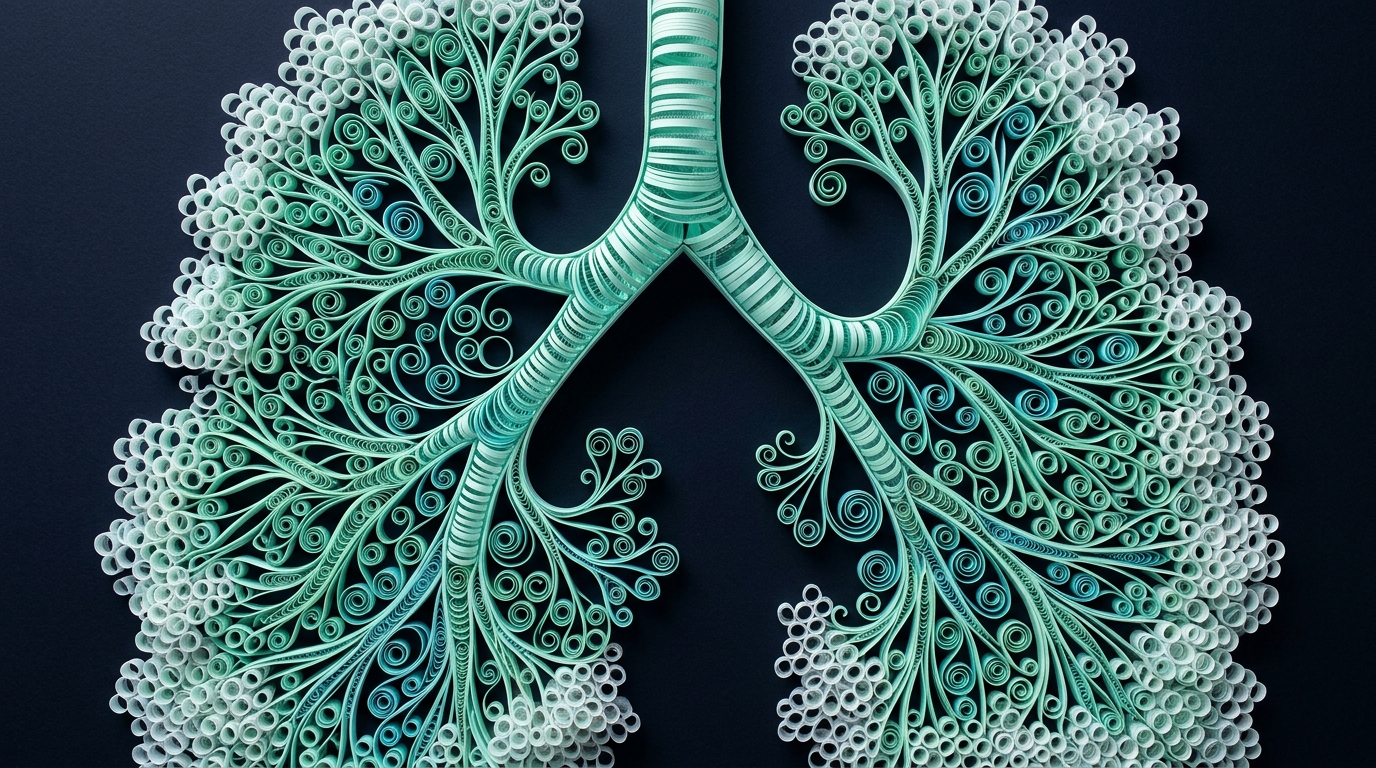
Bronchial Epithelial Shield & Mast Cell Degranulation Quiescence
Airway Epithelial Repair & Corticosteroid Independence — 90% reduction in acute exacerbations, normalized laminar airflow (FEV1/FVC ≥80%), quiescence of mucosal mast cells, and long-term pulmonary remodeling arrest.
The Vicious Cycle of Airway Remodeling and Sympathetic Overdrive
In chronic persistent asthma, recurrent exposure to fine particulate matter (PM2.5), cold air, and allergen triggers drives subepithelial basement membrane thickening and bronchial smooth muscle hypertrophy. While short-acting beta-agonists (SABAs) provide temporary relief through smooth muscle relaxation, chronic over-reliance down-regulates β2-adrenoceptors and increases bronchial hyperresponsiveness.
True long-term airway stabilization mandates addressing the root drivers: eosinophilic mucosal infiltration, cysteinyl leukotriene (LTC4, LTD4) hypersecretion, and sympathetic-parasympathetic autonomic dysregulation.
The Anti-Inflammatory Pulmonary Nutrition Matrix
Dietary flavonoids, particularly quercetin and apigenin, exert potent natural mast cell-stabilizing properties by inhibiting calcium influx and blocking 5-lipoxygenase (5-LOX), the key enzyme in leukotriene synthesis. When coupled with marine long-chain omega-3 fatty acids, cell membrane phospholipid pools replace arachidonic acid with eicosapentaenoic acid (EPA), attenuating the generation of pro-inflammatory 4-series leukotrienes.
Autonomic Airway Modulation: 0.10 Hz Diaphragmatic Pacing
The pulmonary tree receives dense autonomic innervation via the vagus nerve. Chronic hyperventilation (rapid, shallow apical breathing) blows off carbon dioxide, causing hypocapnic bronchoconstriction. Training slow, diaphragmatic nasal breathing at the physiological resonance frequency of 5.5 to 6 breaths per minute (0.10 Hz) restores arterial CO2 reserves, engages the Hering-Breuer deflation reflex, and reduces bronchial smooth muscle spasm.
The Vicious Cycle of Airway Remodeling and Sympathetic Overdrive
In chronic persistent asthma, recurrent exposure to fine particulate matter (PM2.5), cold air, and allergen triggers drives subepithelial basement membrane thickening and bronchial smooth muscle hypertrophy. While short-acting beta-agonists (SABAs) provide temporary relief through smooth muscle relaxation, chronic over-reliance down-regulates β2-adrenoceptors and increases bronchial hyperresponsiveness.
True long-term airway stabilization mandates addressing the root drivers: eosinophilic mucosal infiltration, cysteinyl leukotriene (LTC4, LTD4) hypersecretion, and sympathetic-parasympathetic autonomic dysregulation.
The Anti-Inflammatory Pulmonary Nutrition Matrix
Dietary flavonoids, particularly quercetin and apigenin, exert potent natural mast cell-stabilizing properties by inhibiting calcium influx and blocking 5-lipoxygenase (5-LOX), the key enzyme in leukotriene synthesis. When coupled with marine long-chain omega-3 fatty acids, cell membrane phospholipid pools replace arachidonic acid with eicosapentaenoic acid (EPA), attenuating the generation of pro-inflammatory 4-series leukotrienes.
Autonomic Airway Modulation: 0.10 Hz Diaphragmatic Pacing
The pulmonary tree receives dense autonomic innervation via the vagus nerve. Chronic hyperventilation (rapid, shallow apical breathing) blows off carbon dioxide, causing hypocapnic bronchoconstriction. Training slow, diaphragmatic nasal breathing at the physiological resonance frequency of 5.5 to 6 breaths per minute (0.10 Hz) restores arterial CO2 reserves, engages the Hering-Breuer deflation reflex, and reduces bronchial smooth muscle spasm.
🌱 6th Grade "Teaspoon" Plain Language Edition
How Breathing Works and How We Can Help Our Lungs
Our lungs are like an upside-down tree with thousands of tiny branches. In people with asthma, the walls inside these tiny branches get swollen and sensitive, like when your skin gets red after a bee sting. When cold air or pollen enters, the muscles around the airways squeeze tight, making it feel like breathing through a skinny straw.
Many people use their quick-relief inhaler over and over, but that only relaxes the muscles for a few hours without cooling down the swelling inside the walls.
Here is how we can build strong, calm lungs:
- Breathe Through Your Nose: Your nose is a built-in air filter and humidifier. It warms and cleans the air before it reaches your lungs.
- Slow Belly Breathing: Taking slow, gentle breaths into your belly (inhaling for 4 seconds, exhaling for 6 seconds) tells your nervous system that you are safe, allowing airways to open naturally.
- Eat Colorful Berries: Dark blue and purple berries contain natural plant shields that soothe swollen tissues.
Scholarly Marginalia & Peer Review Ledger
Annotate in the margins, highlight excerpts, critique mechanisms, or explore our physical-feel Grading Pen to write, circle, and stamp your peer-review remarks.
📸 How to Snapshot Text into the Margins: